 |
 |
|
 |
||
New Zealand Veterans Deceased Listings post-1972

* RNZIR
* Artillery
* Anzac Bn's Comd & Support
* Special Air Service
* NZ Army Training Team
* Engineers
* Armoured
* Army Service Corp
* NZ Medical Services Team
* NEWZAD
* RNZN
* RNZAF
* HQ NZ V Force Saigon
* Visitor to Sth Vietnam
Advising of deceased vet
Abbreviation NK = Not Know
Mounting Medals
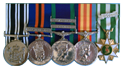
Details on website,
nzmilitarymedals.com.
Introduction to New Zealand Vietnam Veterans Deceased Listings
Since 1972, a significant number of personnel have passed away following their military service for the New Zealand Defence Force in South Vietnam during years from 1964 to 1972.An official nominal roll was never maintained of personnel who served for New Zealand Defence Force during the Vietnam war. It was by chance a military officer intercepted pay books on their way to destruction. From those books the officer created an unofficial nominal roll listing those who served and with which sub-unit. Some names on the list are repeated within various sub-units where an individual served more than one tour of duty.
A count of all names determined that just over 3200 personnel actually served, given those with two or more tours of duty.
Purpose
The purpose of this site is to list deceased New Zealand Defence Force personnel following their service in South Vietnam in order that a pattern of causation can be determined, such as deaths from cancers.Of significance in the early 1980's an apparent causation of death was from abnormal health diseases and disorders, especially from cancer types that were uncommon, such as soft tissue sarcoma. At that time the stastical records indicated the USA population norm for that cancer as being 4:100,000. Forty years later, in 2010, the United Kingdom had a population of 62.77 million people, of whom 3300 were reported with soft tissue sarcoma.
Another factor highlighting issues among Vietnam veterans was an apparent disparity of the abnormal health diseases and disorders within that group and those who had served only in Malaysia and Borneo and not Vietnam. Initial root cause analysis by the Korea and Southeast Asia Forces Association indicated that the abnormal health diseases and disorders were NOT evident among personnel who had served in South East Asia but not Vietnam.
The New Zealand Ministry of Health in 2013 indicated the life expectancy at birth was 73.0 years for Maori males and 77.1 years for Maori females; it was 80.3 years for non-Maori males and 83.9 years for non-Maori females.
Listings
The listing is on the basis of:- Service number
- Last name
- Initials
- Age
- Sub-unit
- Reported cause of death [Causation]
- Year of death
- Other reported medical conditions
The relevance of information in this site is that no other such records have been collated. It is denied by researchers contracted to the New Zealand Government that New Zealand forces were exposed to defoliant herbicides whilst in South Vietnam.
It is a historical fact that the majority of New Zealand military personnel served as sub-units integrated into the 1st Australian Task Force based at Nui Dat in Phouc Tuy Province. This is validated in various unit books produced at the end of a tour, such as that of 4th Royal Australion Regiment/NZ [ANZAC] Battalion. The Australian Government accepts their troops were exposed to defoliant herbicides, such as Agent Orange.
In 1985, Victor Johnson, being a New Zealand Vietnam veteran, plotted all USAF defoliant spray missions flights paths over Phuoc Tuy province onto a topographical map of that region. The flight path co-ordinates were obtained from the official Ranch Hand HERBS tapes. The physical number of New Zealanders serving in South Vietnam was also determined using the Flinkenburg nominal role.
Furthermore, Victor Johnson also identified from successive battalion operational records those New Zealand sub units that were most likely to have been exposed to defoliants such as Agent Orange whilst in Phuoc Tuy province. He wrote up the outcomes titled as 'New Zealand Military Forces Likely to Have Been Exposed to Chemicals in South Vietnam'
The above document with an International Serial Book Number [ISBN] was deposited in 1985 with the New Zealand National Library. Because of controversy surrounding the Agent Orange subject, Johnson conducted briefing sessions during the mid-1980's on his findings. These were scheduled events at New Zealand veteran reunions for organisations that included Korea and South East Asia Forces Association, and the Ex-Vietnam Services Association in Rotorua.
The above and following information that has been so readily available since 1985 was neither sourced, used, or referenced in studies contracted by the New Zealand Government. Other douments written by Johnson for purposes of submissions, recommendations, and reference include:
- Parliamentary Select Committee submission in 1990
- A recommendation to New Zealand Vietnam Veterans Association in 1994.
- Submission to the New Zealand parliamentary health select committee in November 2003
Deceased New Zealand Vietnam Veterans Links
The following are the links to the sub-unit listings of deceased New Zealand Vietnam veterans.Royal New Zealand Infantry Regiment Rifle Companys'
* Artillery
* Anzac Bn's Comd & Support
* Special Air Service
* NZ Army Training Team
* Engineers
* Armoured
* Army Service Corp
* NZ Medical Services Team
* NEWZAD
* RNZN
* RNZAF
* HQ NZ V Force Saigon
* Visitor to Sth Vietnam
Contact Webmaster, Copyright, all rights reserved. Created 13 Nov 2002, updated 8 July 2025.